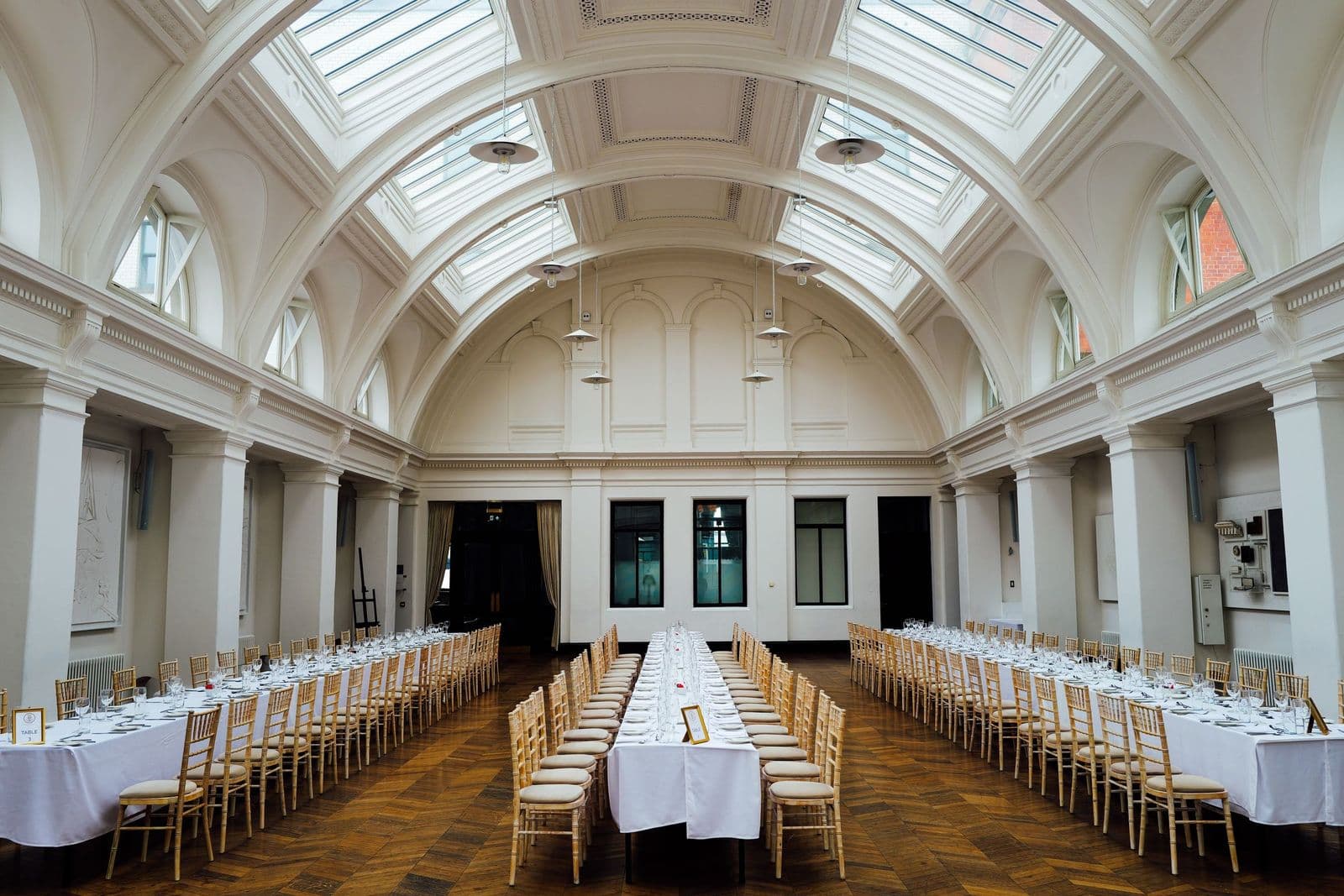

Photo: Valeria Boltneva / Pexels (photo page on Pexels, opens in a new tab)
- Good for
- Running the business
Young's reported Christmas bookings 11% ahead of the same point last year in its interim results for the 26 weeks ended 28 September 2026, released on 12 November. It called the half a record, with adjusted profit before tax of £37.1m, up 19.3%. Fuller's, for the 26 weeks to 26 September, reported adjusted profit before tax of £28.2m, up 25%, and said its own Christmas bookings were 16% ahead of the comparable point last year. These are encouraging company claims, but none of them is a Christmas forecast for our own sites.
Young's also said walk-in trade over Christmas and New Year remained a huge focus. That qualification matters. A growing booking total can conceal unpaid deposits, crowded Saturdays and spare capacity elsewhere. We need a curve that shows when demand lands, how secure it is and what resources it requires.
For group leads, the useful response is a common review format that GMs can complete and area managers can challenge. We would build it around three questions: what is secured, what capacity remains, and where does labour need to move?
Compare the same point in the booking cycle
Ask every GM for a dated snapshot, using the same cut-off across the group. Compare it with the equivalent booking point last year, then split December by service date and session. Keep booking count, booked covers and deposits collected in separate columns. A larger average party can lift covers without increasing the number of bookings.
Agree what counts as confirmed before combining site returns. A provisional enquiry should not carry the same weight as a booking that has met the site's deposit terms. Record outstanding deposits alongside their due dates, so a future payment is distinguishable from an overdue one.
We also want the change since the previous review. If the headline total rises while overdue deposits rise faster, the apparent improvement needs investigating. Ask area managers to explain the exceptions, with a named owner and a follow-up date, rather than forwarding an unqualified percentage to the leadership team.
Make the deposit exposure visible
Every £ figure in this worked example is illustrative. We use an example 80-cover dining pub with 36 confirmed December party bookings, averaging 18 guests, and a gross deposit of £10 per guest. Thirty bookings have paid. For this example, the remaining six payments are due this week.
- Total booked party guests: 36 × 18 = 648.
- Deposits due: 648 × £10 = £6,480.
- Guests covered by paid deposits: 30 × 18 = 540.
- Deposits collected: 540 × £10 = £5,400.
- Unpaid bookings: 36 minus 30 = 6.
- Outstanding deposits: 6 × 18 × £10 = £1,080.
The management question is who will collect that illustrative £1,080 and when the next review will confirm the outcome. We keep deposit cash separate from the sales forecast so it is not counted twice.
For an illustrative downside, suppose two unpaid parties of 18 cancel and their slots remain empty. At an illustrative gross spend of £35 per head:
- Lost covers: 2 × 18 = 36.
- Lost gross spend: 36 × £35 = £1,260.
- Assuming 20% VAT, lost net sales: £1,260 ÷ 1.20 = £1,050.
That is sales exposure, not lost profit. These parties had not paid, so no deposit offsets it; a paid deposit might, depending on the booking terms. The example gives an area manager a reason to prioritise collection without treating every unpaid booking as a certain cancellation.
Protect capacity where walk-ins matter
Continue with the illustrative pub on Saturday 19 December. Its planning assumption is two sittings across 80 covers. We test the capacity before accepting another large party:
- Available cover slots: 80 × 2 = 160.
- Existing party covers: 28 + 24 + 20 = 72.
- Add other booked covers: 72 + 40 = 112.
- Slots remaining: 160 minus 112 = 48.
- Accept another party of 40: 48 minus 40 = 8 slots left.
Those eight slots are a planning total, not proof that a particular table is available at the right time. The GM still needs to confirm where the space sits within each session.
We would ask the area manager to review that proposed booking against the site's own walk-in history and remaining enquiry demand. Some sites benefit from securing the party; others may give away valuable flexibility. A group-wide rule to accept every large booking would miss that difference.
The shared framework should make the decision visible: capacity before acceptance, capacity afterwards, and the GM's reason. Young's 11% increase is its own estate's booking position, not a target that justifies filling every remaining slot across ours.
Put labour against the peaks
An average can disguise a poor allocation. Our illustrative pub estimates that its four December Saturdays need 180, 210, 250 and 200 labour hours respectively.
- Total hours required: 180 + 210 + 250 + 200 = 840.
- Average requirement: 840 ÷ 4 = 210 hours.
- A flat 210-hour rota overstaffs the first Saturday: 210 minus 180 = 30 hours.
- At an illustrative loaded cost of £16 per hour, extra labour is 30 × £16 = £480.
- The peak Saturday is short: 250 minus 210 = 40 hours.
The loaded hourly cost is an illustrative planning assumption. We would use each site's actual cost and skill requirements when making decisions. Moving hours also requires checking availability and the mix of roles; total hours alone cannot establish readiness.
Ask GMs to explain the demand assumptions behind each peak and identify support needed from the group. Do not add 11% to every rota line because Young's reported bookings up 11%.
Watch
Christmas Party Bookings for Pubs and Restaurants: Set Menus, Deposits and Big Groups
TablezUK on YouTube (opens in a new tab) ·
Why watch: a short film on set menus, deposits and big groups, useful before we treat the Christmas diary as secured demand.
Watch
Fuller's Christmas bookings are up 16%
Hospitality Insights - News, Tech and updates on YouTube (opens in a new tab) ·
Why watch: a 47-second trade clip on Fuller's saying its Christmas bookings are 16% ahead. We treat that as the company's claim and a prompt to check our own diary, deposits and party staffing.
Your action this week
Issue one Christmas curve template to your GMs, requiring a dated return showing deposits outstanding, remaining capacity by session and labour hours against each December peak, with one exception for the area manager to resolve.