Photo: cottonbro studio / Pexels (photo page on Pexels, opens in a new tab)
Nobody got into hospitality for the paperwork. But a handful of laws touch every shift, from the sandwich in the chiller to the pint you're pulling. Get these right and you protect your guests, your team and your licence. This is the plain-English version. It's a starting point, not legal advice, so check the official guidance (linked at the bottom) for your nation and your setup.
Allergens: the 14 you must know
UK food law names 14 allergens that businesses must tell customers about when they're used as ingredients:
celery · cereals containing gluten (wheat, rye, barley, oats) · crustaceans · eggs · fish · lupin · milk · molluscs · mustard · peanuts · sesame · soybeans · sulphur dioxide and sulphites (above 10mg/kg or 10mg/litre) · tree nuts (almond, hazelnut, walnut, cashew, pecan, Brazil, pistachio, macadamia)
For food made to order (restaurant meals, a coffee made at the counter), you must provide accurate allergen information. The legal minimum lets you give it verbally, as long as there's a clear sign telling customers to ask. Food Standards Agency best practice goes further: have the information easily available in writing (on the menu, a matrix or a booklet) and back it up with a conversation.
If you're not sure about an allergen, you don't guess. You ask.
Natasha's Law: food packed before it's ordered
Since 1 October 2021, food that's prepacked for direct sale (PPDS) has needed a full label across the UK. This is known as Natasha's Law, named after Natasha Ednan-Laperouse.
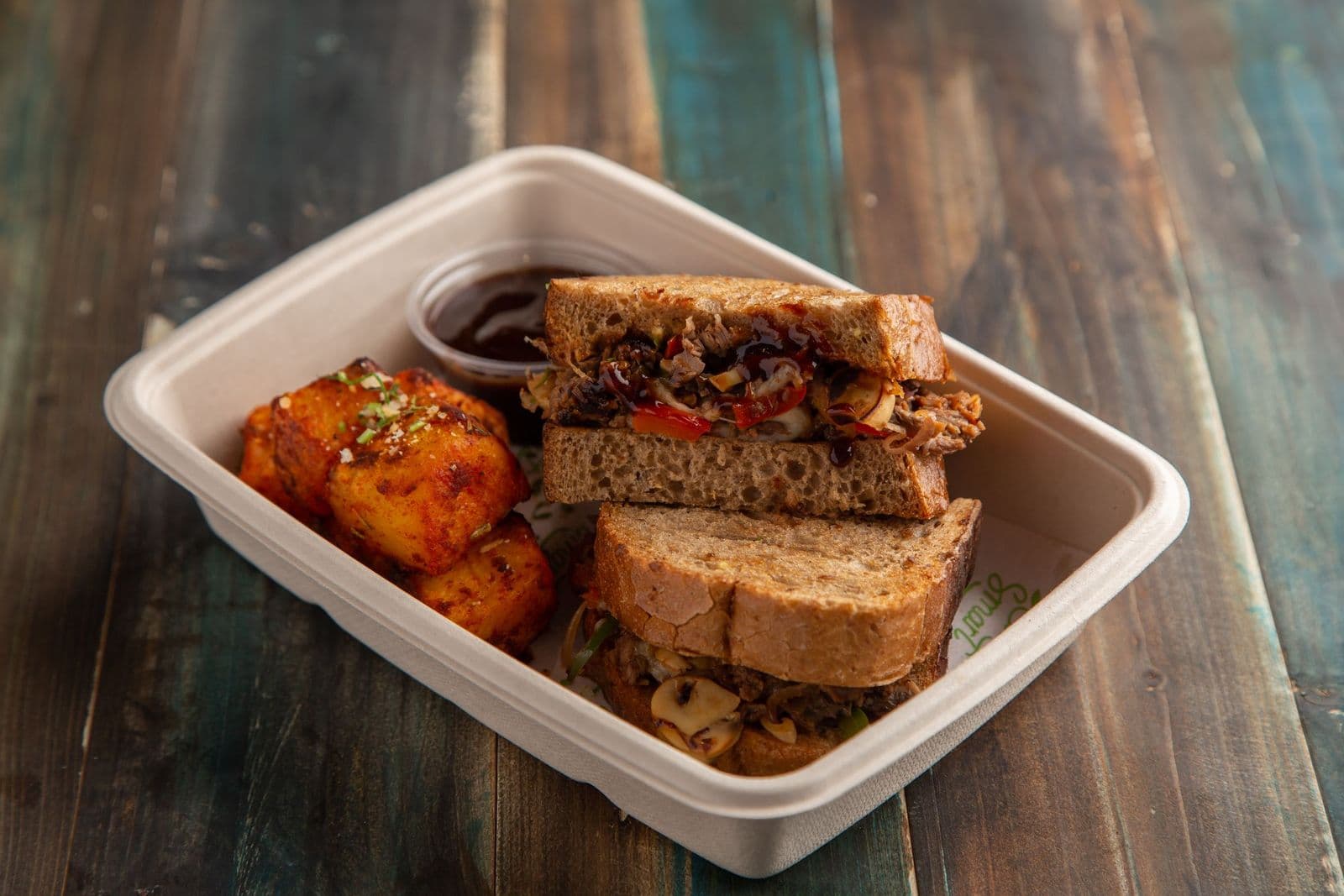
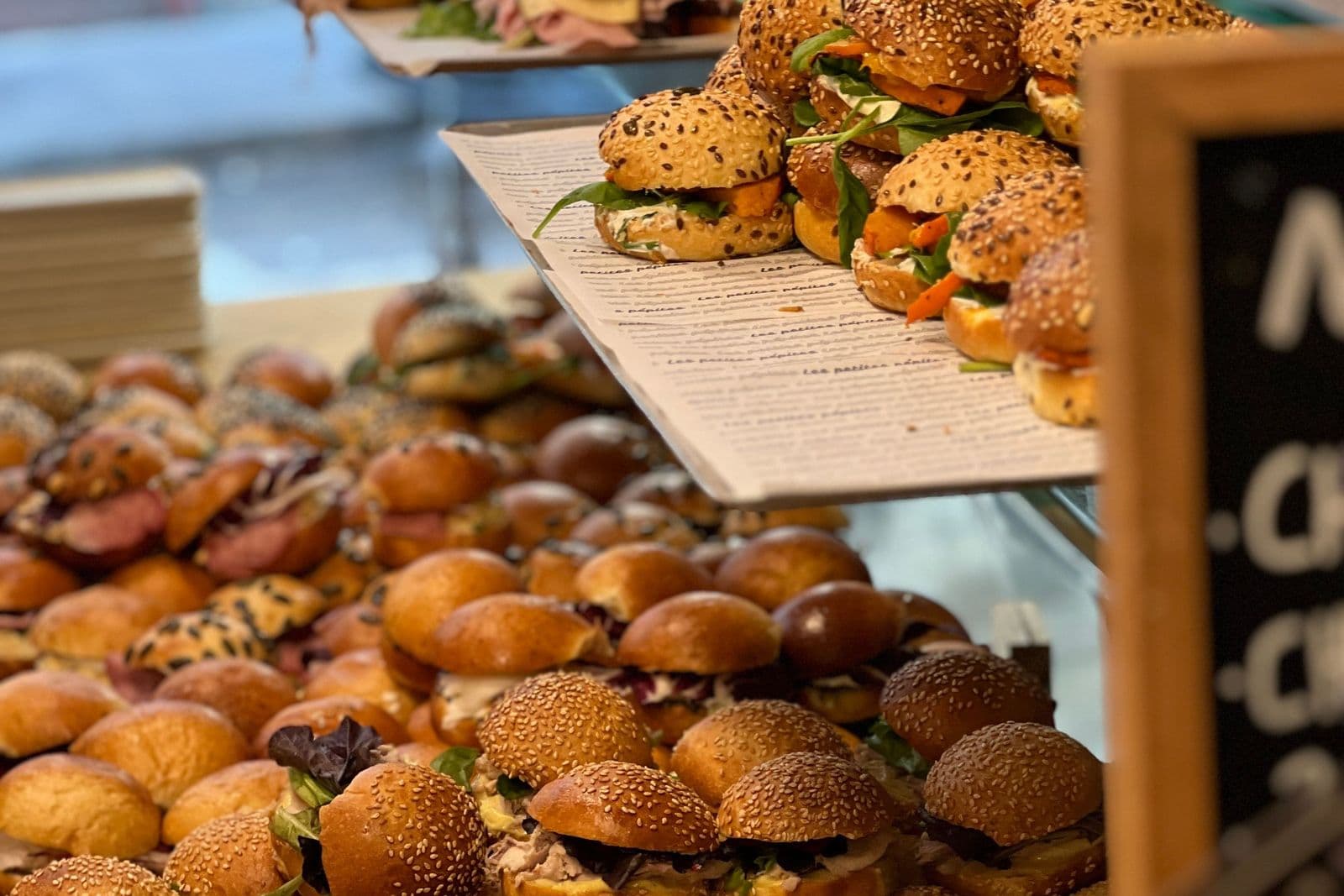
PPDS means food that's packed on the same premises it's sold from, before the customer orders it. Think sandwiches made in the morning and put in the chiller, pots of salad on the counter, or boxed pastries in a cafe.
The label must show:
- The name of the food
- A full ingredients list, headed "Ingredients", in descending order of weight
- Any of the 14 allergens emphasised every time they appear in the list, using bold, capitals, a contrasting colour or underlining
Handwritten labels are fine if they're legible and meet the size rules. The label must be visible without opening the packaging. Scotland has equivalent rules, with its own guidance from Food Standards Scotland.
Alcohol licensing: who can sell what
In England and Wales, the Licensing Act 2003 sets the rules. The basics:
- A premises licence is needed to sell alcohol on a permanent basis.
- A designated premises supervisor (DPS), who must hold a personal licence, is named on the premises licence and has day-to-day responsibility.
- You don't need a personal licence to serve, but every sale must be authorised by a personal licence holder.
- The four licensing objectives run through everything: prevention of crime and disorder, public safety, prevention of public nuisance, and protection of children from harm.
And on the bar:
- Selling alcohol to under-18s is an offence, as is knowingly selling to someone who is drunk.
- An age verification policy is a mandatory condition: anyone who looks under 18 (or a higher age your policy sets, such as 21 or 25) must show valid ID. In Scotland, a Challenge 25 policy is required by law.
- Free drinking water must be available on request where reasonably available.
- Small measures must be available and customers told about them: half pints of beer or cider, 25ml or 35ml of gin, rum, vodka or whisky, and 125ml glasses of wine.
- Irresponsible promotions are banned, such as drinking games or unlimited drinks for a fixed price.
Scotland has its own licensing law (the Licensing (Scotland) Act 2005), and Northern Ireland has its own system too. Check with your local licensing authority.
People: pay, tips and right to work
- Minimum wage. National Minimum Wage and National Living Wage rates go up every April, and depend on age and apprenticeship status. Check the current rates on GOV.UK before each April payroll, not after.
- Tips. In England, Scotland and Wales, the Employment (Allocation of Tips) Act 2023 means employers must pass on all qualifying tips and service charges to workers without deductions (other than things like income tax), share them fairly, pay them out by the end of the following month, have a written tipping policy available to all workers and keep records for three years. The Employment Rights Act 2025 will add a duty to consult workers (or their union or elected reps) before you write the policy, and to review it at least every three years, but as of October 2026 that part isn't in force yet. A revised code of practice is due to go out to consultation, so for now follow the existing code and check GOV.UK for updates.
- Right to work. Every employer must check that staff have the right to work in the UK before they start.
- Breaks. Adult workers are generally entitled to a 20-minute uninterrupted rest break if they work more than six hours a day.
If you're a bigger operator
Larger businesses in England (generally those with 250 or more employees) must show calorie information on menus for certain food under the Calorie Labelling (Out of Home Sector) (England) Regulations 2021. Check whether it applies to you.
Sources
- Food Standards Agency: Allergen information for non-prepacked foods, best practice (includes the 14 allergens) (opens in a new tab)
- GOV.UK (FSA): Labelling guidance for prepacked for direct sale (PPDS) food (opens in a new tab)
- Food Standards Agency: Introduction to allergen labelling for PPDS food (Natasha's Law) (opens in a new tab)
- Food Standards Scotland: Prepacked for direct sale (opens in a new tab)
- GOV.UK (Home Office): Alcohol licensing (opens in a new tab)
- legislation.gov.uk: Licensing Act 2003 (Mandatory Licensing Conditions) (Amendment) Order 2014, Schedule (opens in a new tab)
- legislation.gov.uk: Licensing Act 2003, section 141 (sale of alcohol to a person who is drunk) (opens in a new tab)
- legislation.gov.uk: Licensing Act 2003, section 146 (sale of alcohol to children) (opens in a new tab)
- gov.scot: Alcohol etc. (Scotland) Act 2010 guidance, age verification policy (opens in a new tab)
- GOV.UK: Code of practice on fair and transparent distribution of tips (opens in a new tab)
- GOV.UK: Distributing tips fairly: revised statutory code of practice (status note) (opens in a new tab)
- GOV.UK: National Minimum Wage and National Living Wage rates (opens in a new tab)
- GOV.UK: Starting a food business (right to work checks, registration) (opens in a new tab)
- legislation.gov.uk: Calorie Labelling (Out of Home Sector) (England) Regulations 2021 (opens in a new tab)