Photo: Engin Akyurt / Pexels (photo page on Pexels, opens in a new tab)
"What's the GP on that?" gets asked in every kitchen and every ops meeting in the country. It's also one of the most commonly fudged numbers in hospitality, usually by forgetting VAT. So let's do it properly, with a burger.
The two-line version
Gross profit (GP) is what's left from the selling price after you've paid for the ingredients. GP% is that figure as a percentage of the selling price, without VAT.
That last bit matters. VAT isn't your money. You collect it for HMRC, so it's not part of your sales.
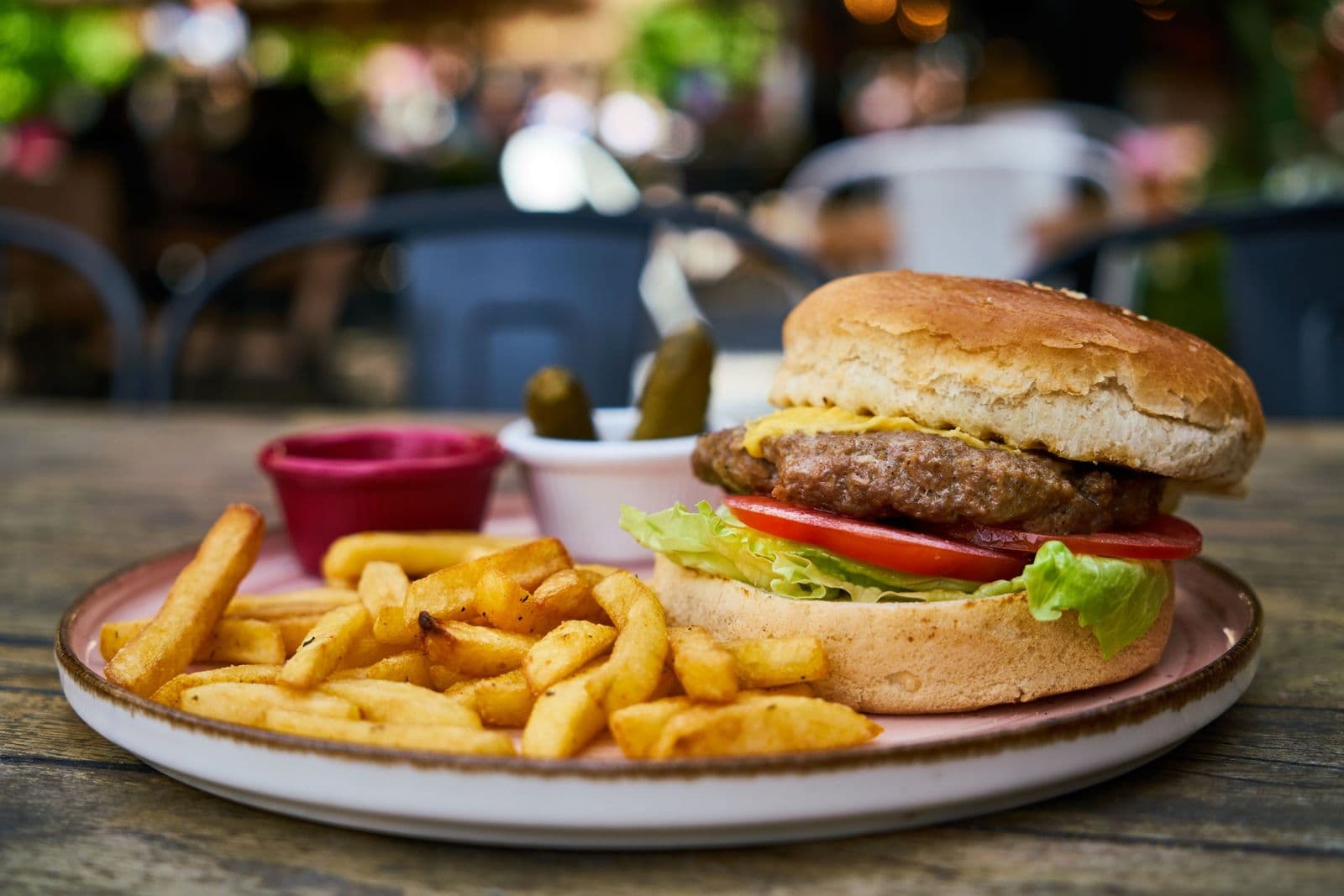
Meet the burger
Our burger sells for £15.00 on the menu. We'll assume VAT at the standard rate of 20%. (Rates on hospitality have been changed temporarily before, so always check the current rate on GOV.UK.)
Step 1: take the VAT out.
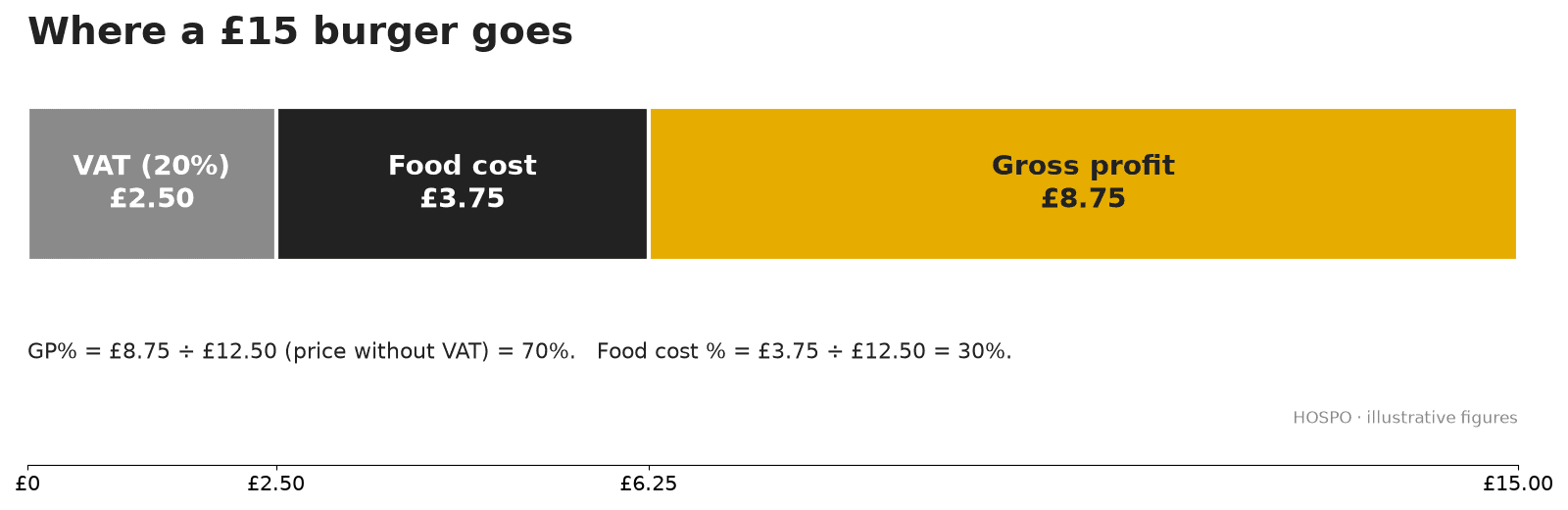
£15.00 ÷ 1.2 = £12.50 net selling price
£15.00 − £12.50 = £2.50 VAT
Step 2: cost the plate. Every component, not just the main bits:
| Component | Cost |
|---|---|
| Brioche bun | £0.45 |
| Beef patty | £1.80 |
| Cheese | £0.30 |
| Salad and pickles | £0.25 |
| Burger sauce | £0.15 |
| Fries | £0.65 |
| Fryer oil and seasoning (share) | £0.15 |
| Total food cost | £3.75 |
Step 3: work out GP.
£12.50 − £3.75 = £8.75 gross profit
£8.75 ÷ £12.50 = 0.70 = 70% GP
And the flip side: £3.75 ÷ £12.50 = 30% food cost. GP% and food cost % always add up to 100%.
The classic mistake
Work it out on the menu price and you get (£15.00 − £3.75) ÷ £15.00 = 75%. Looks lovely. It's wrong by five points, because £2.50 of that £15 was never yours. If your whole menu is costed this way, your real GP is lower than you think across the board.
VAT isn't your money. Take it out before you do anything else.
Margin isn't markup
People use these interchangeably. They're not the same.
- Margin (GP%) = profit ÷ selling price = £8.75 ÷ £12.50 = 70%
- Markup = profit ÷ cost = £8.75 ÷ £3.75 = 233% (to the nearest whole number)
Same burger, very different numbers. When someone says "we mark up 3x", they mean they sell at three times cost before VAT, which is a GP of about 67%. Make sure everyone in the conversation is using the same one.
Pricing to a target
Say beef goes up and your burger now costs £4.20 to make. You want to hold 70% GP. Here's the shortcut:
Net price = cost ÷ (1 − target GP)
£4.20 ÷ 0.30 = £14.00 net
£14.00 × 1.2 = £16.80 on the menu
You might decide £16.80 is too much and settle on a lower GP, or tweak the dish. That's fine. The point is to make that call on purpose, with the numbers in front of you.
Cash beats percentages (sometimes)
GP% isn't everything. Compare:
| Dish | Net price | Food cost | GP £ | GP% |
|---|---|---|---|---|
| Burger | £12.50 | £3.75 | £8.75 | 70% |
| Sirloin | £25.00 | £10.00 | £15.00 | 60% |
The steak has the lower percentage but puts £6.25 more in the till per plate. If a table is choosing between them, you'd rather they had the steak. Rent and wages are paid in pounds, not percentages. Good menus balance both.

Same maths, behind the bar
Drinks work exactly the same way, which is handy, because wet GP is often where the easy wins are.
A bottle of house red costs you £8.00 (ex VAT) and sells for £30.00 on the list.
- Net price: £30.00 ÷ 1.2 = £25.00
- GP: £25.00 − £8.00 = £17.00
- GP%: £17.00 ÷ £25.00 = 68%
Now sell it by the 175ml glass at £8.40. A 750ml bottle gives you four full glasses (4 × 175ml = 700ml), with 50ml left over.
- Net price per glass: £8.40 ÷ 1.2 = £7.00
- Four glasses: 4 × £7.00 = £28.00 net
- GP: £28.00 − £8.00 = £20.00, and £20.00 ÷ £28.00 = 71.4% (to one decimal place)
That's on paper. If the last 50ml and the half-bottle left open overnight go down the sink, you'll never see it. Wine preservation, accurate measures and a "last glass" special all protect that number.
Where GP actually leaks
Your costed GP is the theoretical one. Your actual GP, from stock takes and sales, is almost always lower. The gap usually comes from:
- Portioning. A heavy hand on fries, an extra slice of cheese.
- Waste. Over-prepping, poor rotation, things going out of date.
- Unrecorded staff food and comps. Fine to do, but record it.
- Price changes. Supplier invoices go up and the costings don't.
Here's what a small leak looks like over a week:
- You sell 200 burgers. Theoretical food cost: 200 × £3.75 = £750
- Net sales: 200 × £12.50 = £2,500
- Portioning and waste add £75, so actual food cost is £825
- Actual GP: £2,500 − £825 = £1,675, and £1,675 ÷ £2,500 = 67%
Three points down, on one dish. That £75 a week is £75 × 52 = £3,900 a year. On a whole menu, the gap gets serious fast.
Cheat sheet
- Net price = menu price ÷ 1.2 (at 20% VAT)
- GP £ = net price − food cost
- GP% = GP £ ÷ net price
- Target price (net) = cost ÷ (1 − target GP%)
- Re-cost dishes when supplier prices change, not once a year
Watch
How London's Hottest Italian Restaurant Uses a Whole Pig | On The Line | Bon Appétit
Bon Appétit on YouTube (opens in a new tab) ·
Why watch: using a whole pig is yield and GP thinking in action. Every cut has a job, and less money ends up in the bin.