Photo: Yuri Barreto / Pexels (photo page on Pexels, opens in a new tab)
- Good for
- Hospo crew
A recent bartender competition has put the simplest drinks on the bar back in the spotlight. The Spirit of Savoia contest, run with Difford's Guide, asks working bartenders to make a cocktail from at least 30ml of Savoia Rosso or Savoia Orancio plus just one other ingredient. The judges are Savoia founder Giuseppe Gallo and Gabriele Armani, head bartender at Paradiso in Barcelona, and the prize is a trip to work alongside the Paradiso team. Difford's Guide lists entries closing on 21 November 2026, with the winner named on 4 December.
We are not here to tell you to enter (though you can). We are here because two ingredients is the drink format you will pour most in the next eight weeks. Spirit and mixer. Aperitivo and soda. Vermouth and tonic. When the bar is three deep in December, these are the drinks that keep the queue moving, and they are also the drinks where every small mistake shows.
Why two ingredients is harder than it looks
With six ingredients, a slightly short measure of one gets hidden by the rest. With two, there is nowhere to hide. The ratio, the temperature, the dilution and the fizz are the whole drink. A guest can tell straight away if a highball is flat, warm or weak, even if they could not tell you why.
That is also why these drinks are a great place to build skill. If you can make a two-ingredient drink taste the same on a quiet Tuesday and a packed Saturday, you have learned consistency, and consistency is what managers notice.
The four things that make or break it
- Ratio. Know the house spec and pour it exactly. If your venue has no written spec for a drink, ask your shift lead which ratio to use, and stick to it.
- Cold. Cold liquid holds fizz better and melts ice more slowly. Mixers should come from the fridge, not a warm shelf under the bar.
- Ice. A glass packed to the top with fresh, dry ice melts more slowly than a few cubes floating. Half-filled glasses go watery fast.
- Fizz. Every stir, shake or splash knocks bubbles out. The less you agitate a carbonated mixer, the livelier the drink.
Build it step by step
We use this build for a spirit and mixer or an aperitivo and soda. Follow your venue's spec for measures and glassware.
- Pick the glass. Clean, polished, no lipstick or water marks. Check it against the light.
- Fill with ice to the brim. Use the scoop, never the glass, to collect ice. A glass used as a scoop can chip into the ice well.
- Measure the base. Use the jigger or the measure your venue requires. Free pouring two-ingredient drinks is the quickest route to inconsistent taste and lost stock.
- Open a cold mixer. A fresh bottle or a properly gassed gun line.
- Pour the mixer gently. Tilt the glass slightly or pour down the bar spoon so the mixer runs down the side rather than crashing onto the ice.
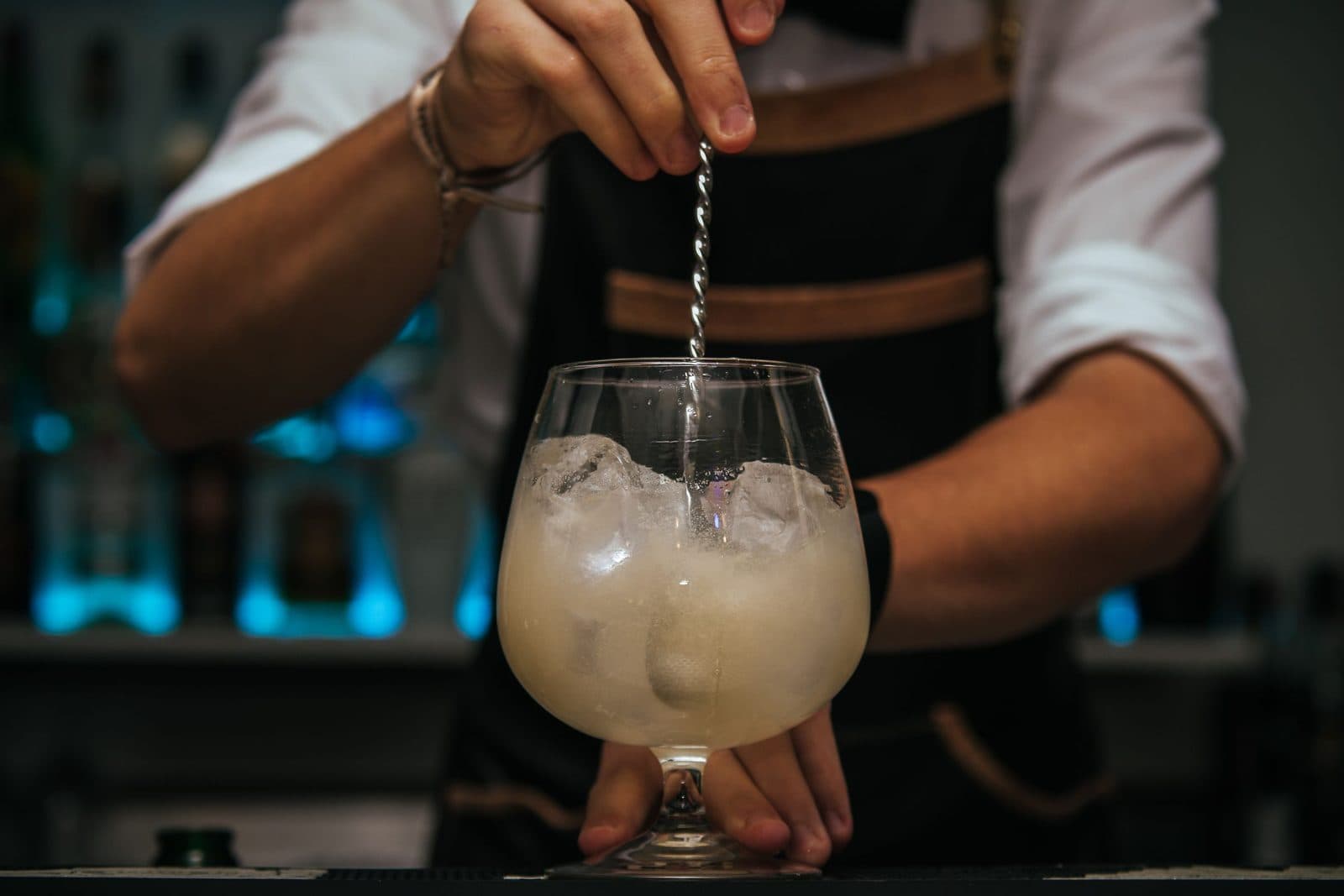
- One lift, not a stir-fest. A single gentle lift from the bottom with the bar spoon mixes the drink. Stirring for ten seconds just flattens it.
- Garnish to spec. Twist citrus peel over the glass so the oils land on top, then drop it in or set it on the rim as your venue does it.
- Serve straight away. A finished highball sitting on the pass while you build the rest of the round is losing fizz.
Taste it like a judge
The competition brief asks for a sustainable serve, which is a nudge many bars could use. On a quiet shift, ask your manager if you can make three versions of one house drink side by side: one at spec, one with slightly more mixer, one with a different garnish. Taste them with a colleague. Note which one you would order again, and why. Taking 20 minutes to learn what "right" tastes like means you will spot "wrong" in a second when it is busy.
If you want to play with the sustainable angle, ask whether peels or trim from prep can be used for garnish. Do not change a live spec without sign-off, and never use anything outside its use-by date or your allergen records.
Set up for speed before the rush
Speed in December is mostly decided before doors open. Our pre-service checklist:
During service, build rounds in a sensible order: glasses and ice first for every drink in the round, then bases, then mixers, then garnish. Pour fizzy drinks last so they reach the guest at their best.
Common faults and the fix
| Fault | Likely cause | Fix |
|---|---|---|
| Flat drink | Warm mixer, over-stirred, old gun line | Chill mixers, one lift only, report the line |
| Watery drink | Too little ice, ice already melting | Fill to the brim with fresh ice |
| Too strong or weak | Free pouring, wrong measure | Use the jigger every time |
| Slow rounds | Hunting for glasses and garnish | Set up the station before doors |
Your action this week
Before your next shift, ask your manager for the written spec of the two-ingredient drink your bar sells most. Build it three times on a quiet moment, taste each one, and write the build steps on a card for your station.